What Is a Data Center? The Engine of the Modern World
Demystifying the incredible facilities that act as the true backbone of our modern, interconnected lives.
A data center is the physical facility that stores, processes, and transmits the data that powers the modern world. It is the home of the cloud, the backbone of the internet, and the engine of artificial intelligence. Every time you stream a movie, attend a telehealth appointment, check the weather, use GPS navigation, send an email, or work remotely, you are relying on a data center to process and deliver that information to you in milliseconds.
Inside a data center are thousands of specialized computers called servers, alongside the networking equipment, cooling systems, and power infrastructure required to keep them running continuously, 24 hours a day, 365 days a year. Because our modern lives depend on these systems, data centers are built to be extraordinarily reliable. They often achieve what the industry calls "five nines" uptime, meaning they are operational 99.999% of the time.
The Split-Second Journey of a Single Click
Choose a digital action below and transmit a packet. Watch how local infrastructure reduces the latency from a frustrating lag to an instantaneous response.
1. Select a Digital Action
2. Choose Server Location
HD Streaming Request
Diagnostics Ready
Select your digital operation and click the transmit button to analyze network flow and server speeds.
The Infrastructure of the 21st Century
Throughout history, new infrastructure has consistently unlocked new eras of prosperity. Data centers are the essential infrastructure of the 21st century in the exact same way that railroads were the essential infrastructure of the 19th century, and the interstate highway system was the essential infrastructure of the 20th century.
Just as those historic investments transformed rural economies and connected communities to national prosperity, data centers are doing the same today, ensuring that the technology of tomorrow is rooted right here in our communities.
From Room-Sized Machines to the Engine of the Internet
Almost everything you did online today passed through a data center. The text you sent, the payment you made, the show you streamed, the search you ran, the map that found your route home. These buildings are the quiet infrastructure of modern life, and most people have never seen one.
Where It All Started: The First Computer Rooms
The story begins in the 1940s with machines like ENIAC, completed in 1945. ENIAC filled a large room, weighed about 30 tons, and used thousands of vacuum tubes. It needed dedicated power, constant cooling, and a controlled, secured space just to function. That special-purpose room was the ancestor of the modern data center: a place built around the machine rather than the people.
Through the 1950s and 1960s, the mainframe era took hold. Businesses, banks, universities, and government agencies installed large IBM and competitor systems in purpose-built computer rooms. This is when many of the design ideas we still use were born: raised floors to route cabling and push cool air, tight climate control, backup power, and restricted access. Computing was centralized because the machines were rare, enormous, and expensive.
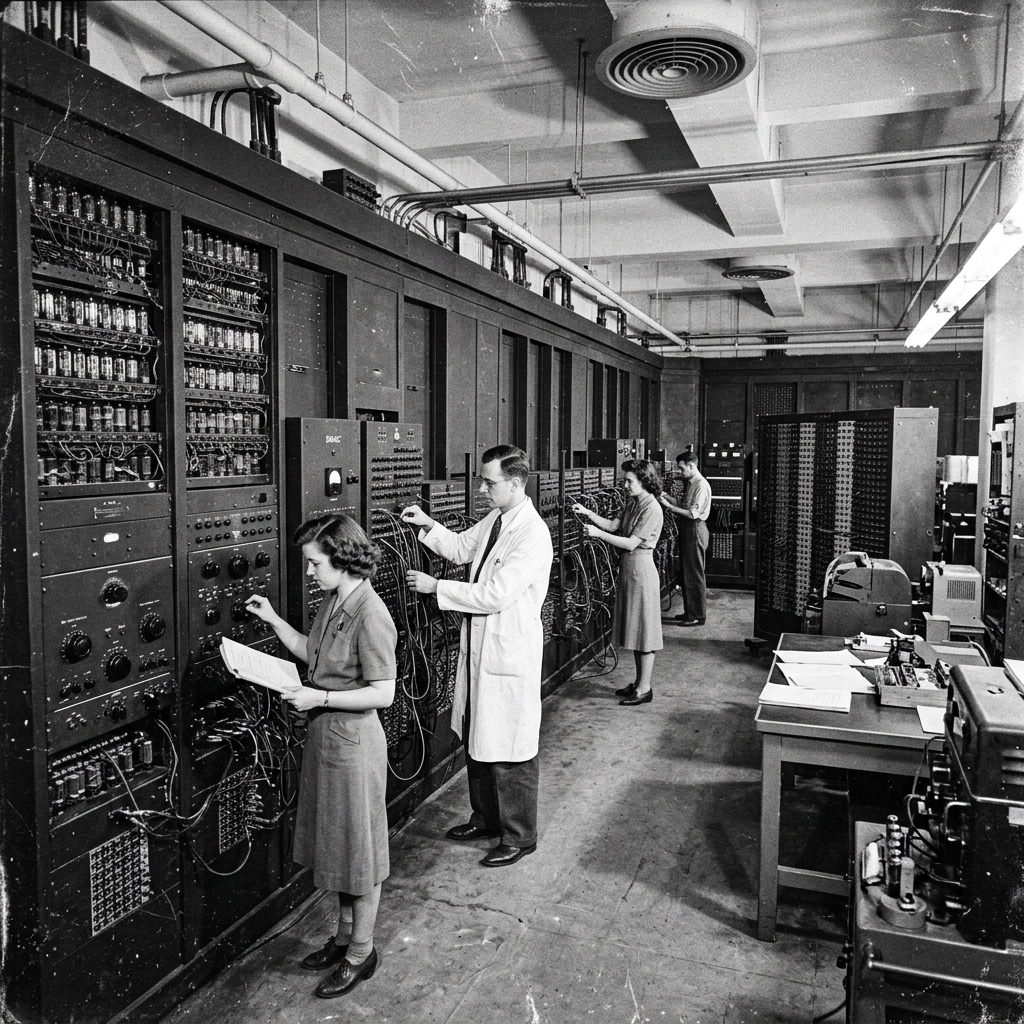
30 tons
Weight of ENIAC (1945)
18,000
Vacuum tubes in one machine
The Detour and the Comeback
When the personal computer arrived in the 1980s, computing scattered. Power moved out of the central room and onto millions of desktops. For a while, the big centralized computer room looked like yesterday's idea.
The internet changed everything back. As the 1990s progressed and the World Wide Web went mainstream, all those desktops and businesses needed somewhere to connect, host websites, and exchange data reliably around the clock. The modern term "data center" took hold in this period. Companies that could not afford to build and staff their own facilities began renting space in shared "colocation" centers, and a whole industry of internet hosting was born. The dot-com boom of the late 1990s drove a massive buildout of server farms.
By the mid-2000s the industry had matured enough to need standards. Design and reliability frameworks such as the TIA-942 standard and the Uptime Institute's Tier classifications gave operators a common language for how resilient a facility was, from basic setups to fully fault-tolerant designs that aim for near-continuous uptime.
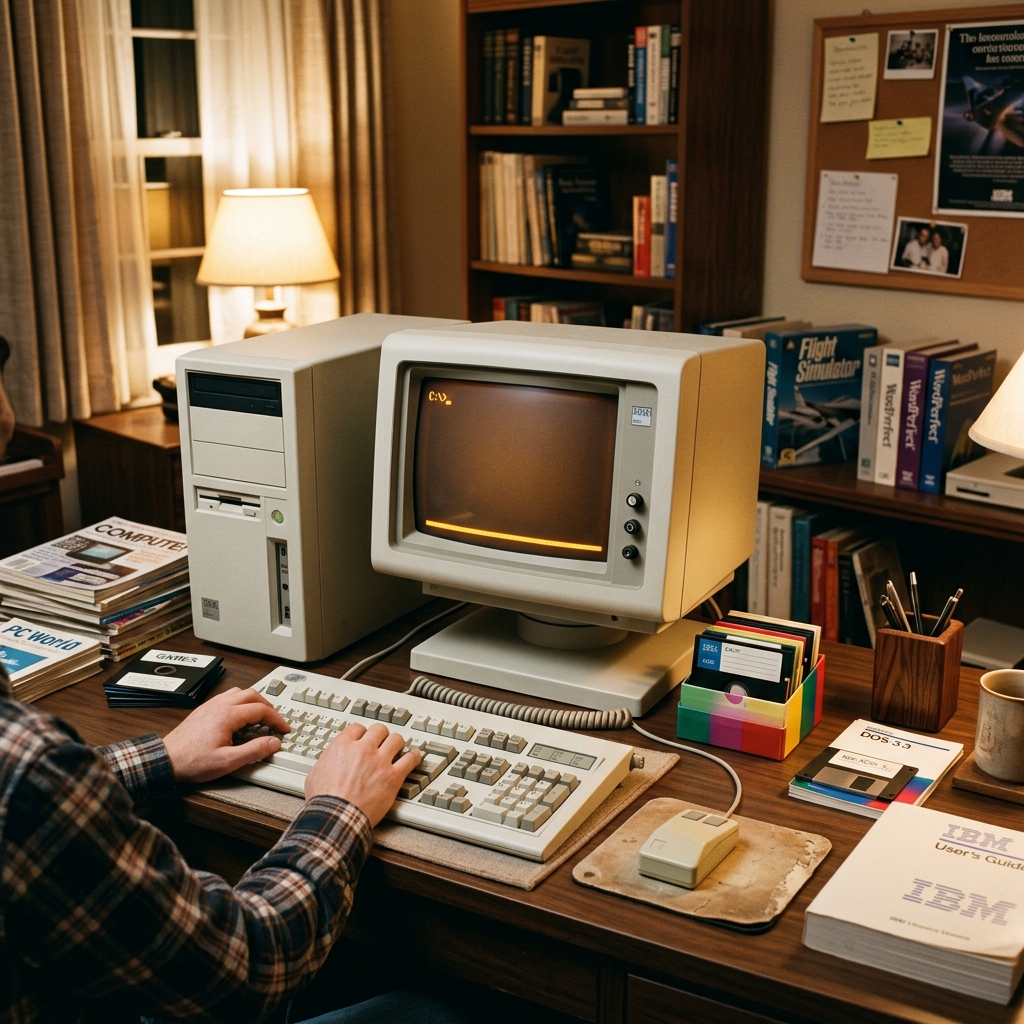
Key Milestones
World Wide Web Goes Mainstream
Every business needed somewhere to host
Colocation Centers Born
Shared facilities for companies of every size
TIA-942 & Tier Standards
Common language for reliability & resilience
The Cloud and Hyperscale Era
The next leap was the cloud. When Amazon Web Services launched in 2006, followed by Google and Microsoft Azure, the model flipped again. Instead of every company owning servers, they could rent computing power on demand from a handful of giant providers. Those providers built "hyperscale" data centers: enormous, highly automated, extremely efficient campuses that can span millions of square feet.
Then came artificial intelligence. Training and running modern AI models requires unprecedented amounts of specialized computing, and that demand has set off the largest infrastructure expansion the industry has ever seen. Statista and other market trackers describe data centers as the heart of the AI revolution, and the world now has an estimated 11,000 to 12,000 of them across more than 170 countries.
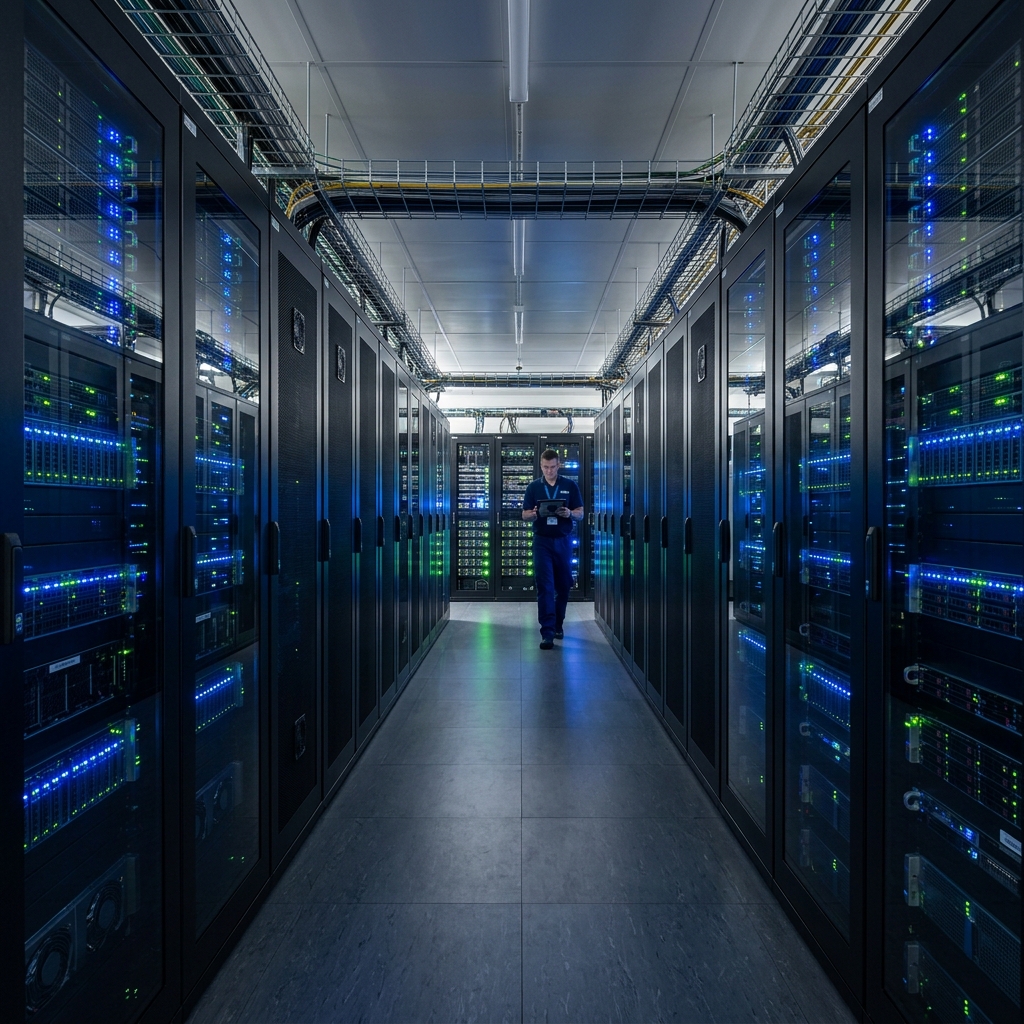
2006
AWS launched the cloud era
12,000+
Data centers worldwide today
170+
Countries with facilities
The Compaction of Compute Power
Drag the slider to see how data processing has shrunk in size and exploded in power over the decades.
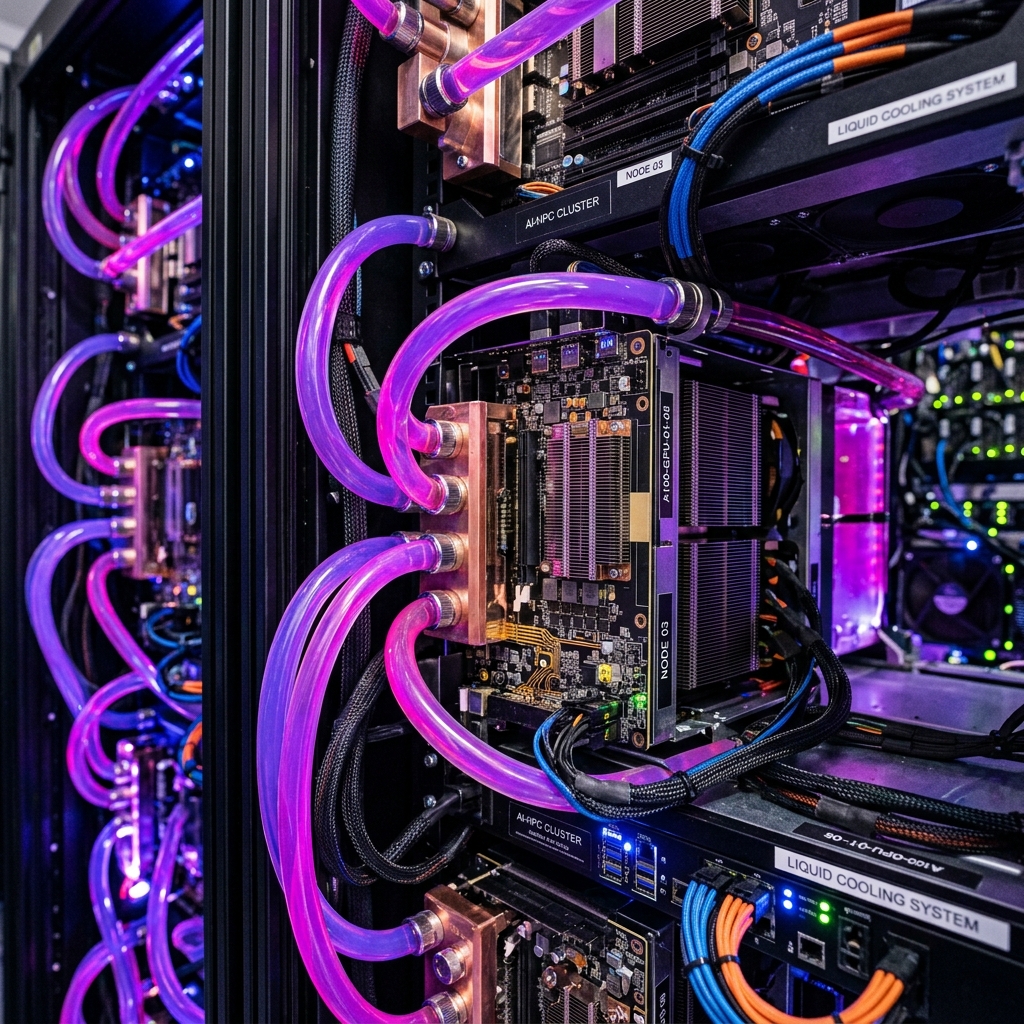
Modern AI GPU Cluster
A super-dense server chassis equipped with advanced accelerators (e.g. NVIDIA H100) running complex generative calculations.
Compression Fact
"A single modern AI GPU cluster performs more calculations in 1 microsecond than ENIAC could perform if it ran continuously for 6,000 years."
System Specifications
Calculations Speed
1,000+ TFLOPs
Trillion float operations/sec
Physical Footprint
3.5 sq. ft.
Fits in standard server slot
System Weight
80 lbs
Rack chassis mountable
Unit Cost (Adjusted)
$40,000
Cost per accelerator cluster unit
*Specifications represent order-of-magnitude standard hardware metrics for each era. Cost adjusted for inflation to 2026 USD.
What Data Centers Actually Do
Strip away the jargon and a data center is a highly reliable building full of servers, storage systems, and networking gear, supported by robust power, cooling, and security. Its job is to store, process, and move digital information without interruption. When these facilities work well, you never think about them. That invisibility is the point.
The Everyday Internet
Websites, email, search, social media, and streaming video — every click and scroll passes through a data center.
Cloud Computing
The software, storage, and tools that businesses of every size now rent instead of owning — all hosted in data centers.
Commerce & Finance
Online shopping, card payments, banking, and systems that clear trillions of dollars in transactions every day.
Critical Services
Hospital records, logistics, utilities, emergency systems, and government services that communities depend on.
Artificial Intelligence
The training and operation of the AI tools rapidly entering work and daily life — from language models to autonomous vehicles to drug discovery. This is the fastest-growing demand driver in the industry.
Why Data Centers Matter
Data centers are now as fundamental to a functioning economy as roads, water systems, and the power grid. The difference is how new this dependence is and how fast it is growing.
$430B
Global data center market in 2026
$1T+
Projected market size within the decade
3×
Demand projected to triple by 2030
This is not a niche tech sector. It is becoming core national infrastructure. Data centers also carry real economic weight where they are built. In Virginia, the heart of the U.S. industry, the data center sector supports tens of thousands of jobs each year and billions of dollars in labor income.
States with significant data center activity see substantial additions to annual economic output, along with property tax revenue that funds schools and local services well beyond what most other commercial development provides.
Why It Matters That Data Centers Are in the USA
It is not enough for data centers to exist somewhere in the world. Where they are built has economic and strategic consequences, and there are strong reasons to build them in the United States.
The U.S. Leads, and Leadership Is Worth Keeping
The United States hosts more data centers than any other country, with more than 4,000 facilities as of 2026, far ahead of any single competitor. North America accounts for roughly 40 percent of the entire global market.
That lead translates into jobs, investment, and influence over the standards and technology the rest of the world adopts.
AI Leadership Runs Through American Data Centers
Analysts at Brookings are blunt about the stakes: if the United States is to sustain its global lead in AI, the buildout of domestic data centers is the limiting factor. Competition with China has sharpened, and decisions about where this infrastructure sits now carry national security implications.
The computing that trains advanced AI is strategic capacity, and a nation that depends on rivals or distant partners for it is in a weaker position.
Data on Home Soil Is More Secure
Keeping American data inside American borders means it falls under U.S. law and oversight rather than the rules of another government. For sensitive financial, medical, defense, and personal information, domestic data centers reduce exposure and keep control closer to home.
Closer Is Faster and More Reliable
Physical distance adds delay. Hosting data near the people and businesses that use it means faster, more dependable service for American users, and resilience that does not hinge on undersea cables or foreign infrastructure during a crisis.
It Builds American Economic Capacity
A domestic data center industry creates skilled jobs, drives investment in the power grid and local infrastructure, expands the tax base that funds public services, and anchors high-value technology work in American communities — including rural and smaller markets that have historically been passed over.
Texas is a leading example of this shift, with analysts describing it as the industry's next major hub.
The Bottom Line
In roughly 80 years, the data center went from a single room built to hold one experimental machine to a global network of facilities that quietly runs the modern world. What started as a place to keep a computer cool has become the foundation of commerce, communication, public services, and the AI economy.
The question is no longer whether societies will rely on data centers. They already do, completely. The real question is where this critical infrastructure gets built and who benefits from it.
For the United States, the answer carries weight far beyond technology: economic strength, national security, and the ability to lead the next era of innovation depend on building it here, in American communities.
What is an AI Data Center?
An AI data center is a specialized facility packed with thousands of high-performance accelerators (GPUs, TPUs, or custom AI chips) that run the massive parallel computations required for modern artificial intelligence. Unlike traditional data centers that mostly store websites, emails, or videos, an AI data center is purpose-built for training and running giant AI models—the "brains" behind tools like Grok, ChatGPT, image generators, and recommendation engines.
Think of it as a super-computer factory dedicated entirely to intelligence at scale.
What does it actually do?
Training
It feeds enormous datasets into neural networks so they can learn patterns (e.g. teaching a model to understand language, recognize images, or predict protein structures).
Inference
It runs the trained models in real time to answer your questions, generate images, translate languages, drive recommendation systems, or power autonomous features.
Research & Scaling
Scientists and engineers use it to experiment with new AI architectures, fine-tune models, and dramatically push the frontier of what's technologically possible.
Why is it important?
AI data centers are the engine of the current technological revolution. Without them:
- Large language models and generative AI simply could not exist at today's level.
- Progress in medicine, climate science, materials discovery, and autonomous systems would slow dramatically.
- Companies and researchers would be limited to small-scale experiments instead of world-changing breakthroughs.
They are now considered critical national infrastructure in many countries because AI is expected to add $15–20 trillion to global GDP by 2030 (comparable to the entire current U.S. economy). In short, they turn electricity and silicon into intelligence, and intelligence is the ultimate multiplier of human progress.
How does it make the internet better?
AI data centers are why the internet feels dramatically smarter and more useful today than it did even five years ago:
Instant, Context-Aware Answers
Instead of ten blue links (think Grok or Perplexity).
Hyper-Personalized Experiences
Netflix knows what you want, Amazon recommends the right tool, Google Maps routes based on live AI predictions.
Generative Capabilities
Create images, write code, summarize documents, or get real-time translations directly in your browser.
Smarter Search & Discovery
AI understands user intent and complex nuance, not just exact keywords.
The result: the internet is evolving from a giant library of static pages into a dynamic, intelligent assistant.
Direct Benefits to Humans
Here's what actual compute power translates to in everyday life. Hover over the tiles to explore the real-world impact.
Productivity
AI assistants draft emails, code, reports, and presentations, saving human workers hours every single week.
Healthcare
Faster drug discovery, groundbreaking AI diagnostics that catch diseases earlier, and hyper-personalized medicine.
Education
Highly personalized tutors that instantly adapt to an individual's learning style, available 24/7 for free or low cost.
Accessibility
Real-time instant translation across global languages, voice-to-text for the deaf, and dynamic image descriptions for the blind.
Entertainment
Flawless content curation and recommendations, personalized AI-generated art, music, gaming assets, and immersive experiences.
Science & Environment
Accelerated hyper-accurate climate modeling, the rapid discovery of new battery materials, and algorithmic efficiency in energy grids.
The Bottom Line
AI data centers are the hidden infrastructure that turns raw computing power into tools that amplify human creativity, solve hard problems, and make life noticeably easier and more interesting. They're not just "tech stuff in a warehouse" — they're the reason the internet went from helpful to genuinely intelligent, and why the next decade of innovation is going to feel like science fiction becoming everyday reality.
*Closed-loop designs help keep their environmental footprint minimal while delivering these massive gains.
Fact or Fiction?
Test what you think you know about data centers. You might be surprised by the answers.